
 en
Call me back
Please leave your phonenumber and we will call you as soon as possible.
- Quality equipment
- Personalised machine advice
- Worldwide delivery
- Since 1977
- All
- Receiving hoppers (8)
- Flat conveyors (252)
- Pot holders (194)
- Elevator incline conveyors (89)
- Roller conveyors (78)
- Potted plant conveyors (76)
- Potting machines (62)
- Curved conveyors (50)
- Box tippers (47)
- Flow pack machines (35)
- Production and packaging lines (32)
- Planting machines (26)
- Apple & Fruit sorting machines (26)
- Dosing hoppers (22)
- Weighing machine (22)
- Work tables (22)
- Binding machines (21)
- Washing machines for vegetables (20)
- Flower processing machines (20)
- Asparagus washing & cutting machines (20)
- Spraying wagons (19)
- Tray seeding machines (19)
- Potato sorting machines (17)
- Label sticker machines (16)
- Cutting machines (16)
- Pepper sorting machines (15)
- Scales (14)
- Harvesting trolleys and trailers (14)
- Hill formers (13)
- Leek harvesters (12)
- Lettuce planting machines (12)
- Weight grading machines (12)
- Box fillers (12)
- Palletizers (12)
- Pipe rail trolleys (11)
- Inspection conveyors (11)
- Net packaging and clipping machines (11)
- Turntables (11)
- Onion harvesters (11)
- Shaking bedlifters (10)
- Tomato sorting machines (10)
- Pallet wrappers (10)
- Bedlifters (10)
- Shrink wrap packaging machines (9)
- Top seal packaging machines (9)
- Roller inspection conveyors (9)
- Spading machines (9)
- Trailers (8)
- Leek planting machines (8)
- Cartons box & tray forming & erecting machines (8)
- Potdispensing forks (8)
- Denesters (8)
- Ventilators (8)
- Electro pipe rail trolleys (7)
- Electro transport trolleys (7)
- Cucumber wrapping machines (7)
- Plastic mulch layer machines (7)
- Asparagus sorting machines (7)
- Tray filling machines (7)
- Bedplanting machines (7)
- Transport and spacing forks (7)
- Stretch film packaging machines (7)
- Telescope conveyors (7)
- Bucket and pail filling machines (7)
- Crate washer and tray washing machines (7)
- Onion haulm toppers (7)
- Weed burners (7)
- Knife peeling machines (7)
- Metal detectors (7)
- Inter row cultivators (7)
- Roller sorting machines (7)
- Potato harvesters (7)
- Brushing machines (6)
- Big-Bale dosage bunker (6)
- Winding machines (6)
- Cucumber sorting machines (6)
- Plastic foil & mulch planting machine (6)
- Leek washing and peeling machines (6)
- Buffer conveyor (6)
- Destacking machines (6)
- Rose sorting & processing machines (6)
- Shrub and tree lifters (5)
- Soil bunkers (5)
- Sorting machines for flower bulbs and Brussels sprouts (5)
- Cherry sorting machines (5)
- Check weighers (5)
- Pneumatic sowing machines (5)
- Rotary cultivators (5)
- Hosereels (5)
- Soil & peat blocking machines (5)
- Static sieve bends (5)
- Onion neck toppers (4)
- Box lifts (4)
- Forklifts (4)
- Carrot harvesters (4)
- Harvesting conveyors (4)
- Water unloaders (4)
- Pot plant buffer conveyor belts (4)
- Fertilizers (4)
- Rose sealing machines (4)
- Leek hole punching machines (4)
- Chain conveyors (4)
- Store loaders (4)
- Sewing machine (4)
- Stacking machines (4)
- Mobile elevator conveyor (4)
- Vibratory feeding hoppers (4)
- Screw conveyors (4)
- Trough conveyors (3)
- Danish trolleys (3)
- Pruning machines (3)
- Brush Polishers (3)
- Greenhouse roof cleaners (3)
- Stairs (3)
- Inter row rotovators (3)
- Carousel planting machines (3)
- Flower sorting machines (3)
- Spraying booms (2)
- Vibratory pregraders (2)
- Shovel containers (2)
- High pressure pumps (2)
- Onions & Bulbs planting machines (2)
- Netting machines for root balls (2)
- Bedformers (2)
- Watering units (2)
- Picking trolleys (2)
- Spinach harvesters (2)
- Cultivators (2)
- Destoners (2)
- Foil wrapping machines (2)
- Drying machines for fruit and vegetables (2)
- Vacuum cleaners (2)
- Rotary harrows (2)
- Pallet strapping machines (2)
- Cabbage harvesters (1)
- Flower bulbs peeling machines (1)
- Optical grading machines that grade on quality (1)
- Separators (1)
- Lily planting machines (1)
- Pot topping machines (1)
- Tomato drying machines (1)
- Irrigation pumps (1)
- Haulm toppers for potatoes (1)
- Tipping containers (1)
- Brussel sprouts harvesting machines (1)
- Supports (1)
- Seedbed Preparators (1)
- Pregraders (1)
- Fruit wax machines (1)
- Debulbing machines for tulips (1)
- Garlic harvesters (1)
- Planting line (1)
- Chain sorting machines (1)
- Decappers (1)
- Box turners (1)
- Topbeltlifters for trees (1)
- Fennel harvesters (1)
- Hedgehog belts (1)
- Soil mixers (1)
- Beans harvesting machines (1)
- Chunk / Length grading machines (1)
- Rinsing machines (1)
- Hydrocyclones (1)
- Dryers (1)
- Foggers LVM (1)
- Skin separators (1)
- Cooling machines (1)
- Paperpot machines (1)
- Web conveyors (1)
- Lettuce harvesters (1)
- Onion loaders (1)
- Water containers (1)
- Harvesting machines for chrysanthemum (1)
- Big bag fillers (1)
- Depalletizers (1)
- Scooter pick up loaders (1)
- Drum / barrel washing machines for vegetables (1)
- Show more (177)Show less
Be the first to receive new additional machines in your mailbox with any of the following features.
![Miedema SB651RZ receiving hopper]()
Miedema SB651RZ receiving hopper
![Spinnekop Combine receiving hopper with cleaner ,inspection conveyor and elevator]()
Spinnekop Combine receiving hopper with cleaner ,inspection conveyor and elevator
![Miedema SB55 receiving hopper 200 cm bottom width]()
Miedema SB55 receiving hopper 200 cm bottom width
![Visser Bolsward receiving hopper with roller cleaning unit for potatoes]()
Visser Bolsward receiving hopper with roller cleaning unit for potatoes
![Miedema SB651 receiving hopper]() Sold under reservation
Miedema SB651 receiving hopper
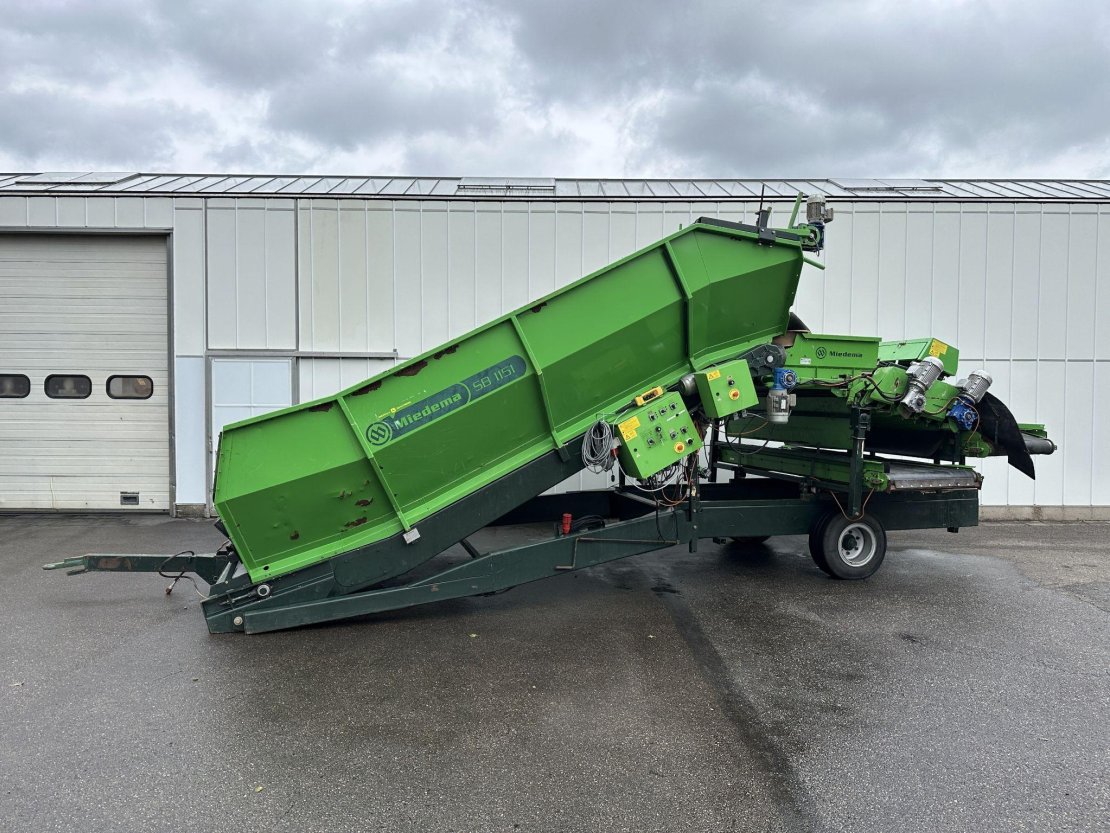
![Miedema SB 1151 RZ receiving hopper]()
Miedema SB 1151 RZ receiving hopper
![Visser Bolsward AL1200 receiving hopper]()
Visser Bolsward AL1200 receiving hopper
![Fraxinus Codius Dema chicory infeed line / planting line with hopper]()
Fraxinus Codius Dema chicory infeed line / planting line with hopper



- Quality equipment
- Personalised machine advice
- Worldwide delivery
- Since 1977
Got a machine for sale?
We are constantly looking for good quality agricultural and horticultural machinery.

About second-hand Receiving hoppers
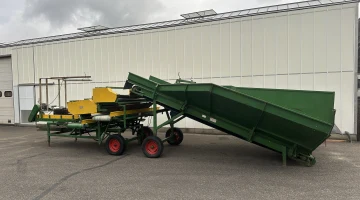
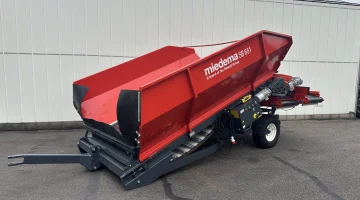
A receiving hopper is often the starting point of a storage intake line for potatoes, onions and other agricultural products. The hopper receives the product from a tipping trailer, acts as a buffer and then feeds it in a controlled flow to the next machine. Think of a sorting machine, a cleaning installation or a conveyor belt.
Depending on the product and the required processing, receiving hoppers are available in various versions. There are models with a single discharge conveyor, several cross discharge conveyors or a roller cleaner that removes soil, dirt and undersized product directly at the intake.
At Duijndam Machines you will find used receiving hoppers from various brands and in a wide range of configurations. View the current stock or read what to look out for when buying a used receiving hopper.
Different versions of receiving hoppers
Not every receiving hopper has the same function. The version determines, among other things, how the product is received, cleaned and distributed to the downstream machines.
Receiving hopper with roller cleaner and two discharge conveyors
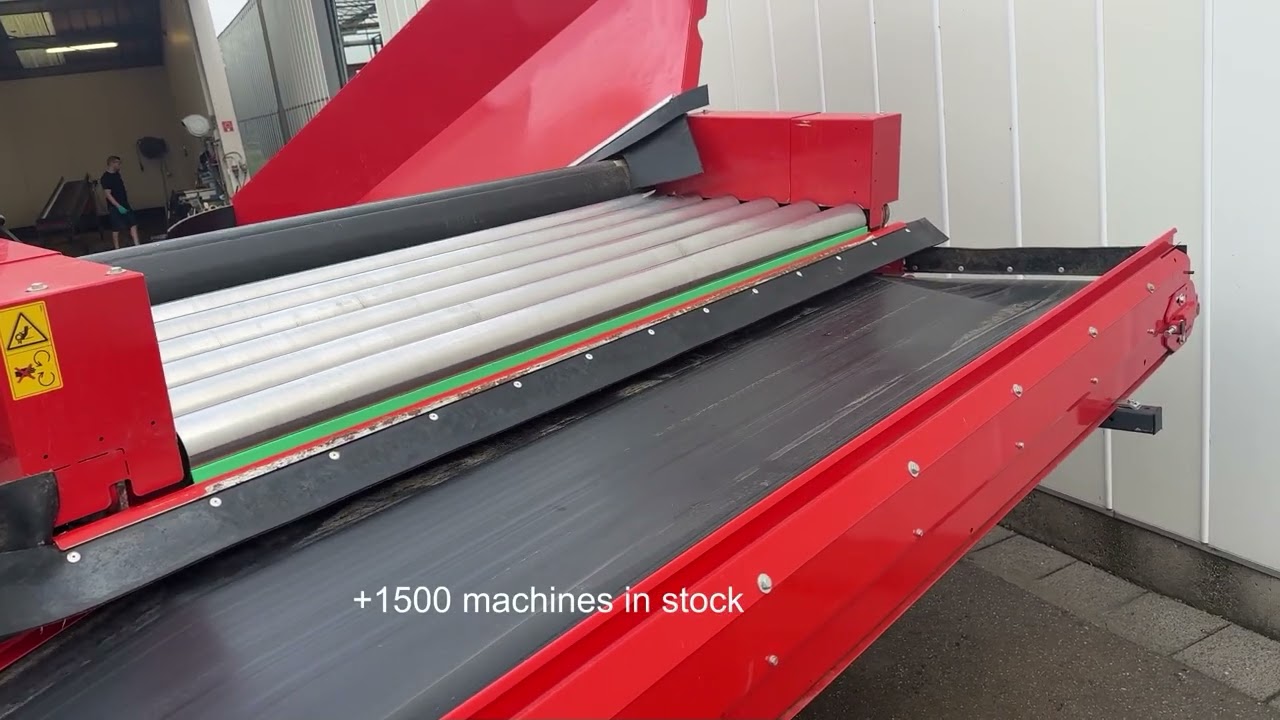
A commonly used version is a receiving hopper with a roller cleaning set and two cross discharge conveyors. The roller cleaner separates soil, dirt and undersized product from the marketable product. The discharge conveyors then carry these product flows away separately.
In this configuration, the first cross conveyor discharges the dirt and undersized product. The rear cross conveyor transports the cleaned product to the next machine in the line.
The roller cleaner can consist of different types of rollers, such as spiral rollers or smooth stainless steel rollers. Which version is suitable depends, among other things, on the crop, the amount of adhering soil and the required cleaning effect.
Receiving hopper with three cross discharge conveyors
If, in addition to removing dirt and undersized product, extra product sorting is required, a receiving hopper can be fitted with three cross discharge conveyors.
In this case, the first conveyor discharges soil and undersized product, for example. The second conveyor can be used for additional sorting, while the rear conveyor transports the bulk of the product to the next step.
With this configuration, different product flows can be separated from each other directly at the receiving hopper. This can prevent extra handling further down the storage intake line.
What to look out for when buying a receiving hopper?
When choosing a used receiving hopper, the dimensions of the machine are not the only thing that matters. The way the product is supplied and the required capacity of the storage intake line also play a role.
Width of the tipping trailer
Always check whether the tipping opening is wide enough for the tipping trailer you use to unload the product. A tipping opening that is too narrow can make unloading more difficult and limit the processing capacity.
Width and capacity of the discharge conveyor
The width of the discharge conveyor affects the amount of product the hopper can handle. The actual capacity also depends on factors such as belt speed, product characteristics and the layer thickness of the product on the belt. Therefore, match the hopper to the capacity of the downstream machines.
Required cleaning and sorting
Do you only need a buffer function, or should the receiving hopper also remove soil, dirt and undersized product? And is additional sorting required? These choices determine which roller cleaner and how many discharge conveyors are needed.
Space and connection to the existing line
Take into account the available space and the position of the next machines. The height and discharge direction of the hopper must match the rest of the storage intake line.
Receiving hoppers as part of a complete storage intake line
A receiving hopper usually does not stand on its own, but forms the first step in a larger processing operation. From the hopper, the product can be fed, for example via a duo conveyor or conveyor belt, to a potato sorting machine. A store loader or box filler can also be part of the subsequent steps.
In addition, there are options to divide the product flow further, for example with dirt discharge conveyors, additional conveyor belts or a second sorting step.
In addition to receiving hoppers, Duijndam Machines also supplies various machines for the rest of the storage intake line. This allows us to think along with you about the connection to existing installations or the composition of a complete line.
Transport of used receiving hoppers
Receiving hoppers are machines of considerable size. Therefore, check in advance whether the machine falls within the permitted transport dimensions. Width in particular can be a point of attention: larger receiving hoppers do not always fit on a standard truck and sometimes have to be transported on a low loader or an open trailer.
For transport to destinations outside Europe, shipping by sea, for example via RoRo transport, can also be an option. The most suitable transport method depends on the dimensions, the weight and the destination.
Well-known manufacturers of quality receiving hoppers
At Duijndam Machines you will find used receiving hoppers from brands such as Miedema, Visser Bolsward, Fraxinus and Spinnekop. View the current stock and contact us if you need help finding a receiving hopper that suits your product and processing line.
Frequently asked questions about Receiving Hoppers
How do I choose the right receiving hopper?
Consider the width of your tipper, the required processing capacity and the functions the hopper needs to perform. Do you only want to receive and feed the product, or do you also need to remove soil, debris and undersized produce? These factors determine which type of hopper is suitable.
What is the difference between a receiving hopper with two and three cross conveyors?
A receiving hopper with two cross conveyors can, for example, separate dirt and undersized produce from the clean product. A third conveyor allows for an additional product separation.
Which rollers are used for cleaning in a receiving hopper?
Depending on the product and the required cleaning action, different types of rollers can be used, including spiral rollers and smooth stainless steel rollers. The type of rollers affects how soil, dirt and undersized produce are separated from the product.
Which crops can be processed using a receiving hopper?
Receiving hoppers are used for products such as potatoes and onions, but can be used for a variety of crops. Whether a hopper is suitable for a specific crop depends on its design, the type of rollers and the way the product is supplied.
Can a receiving hopper be connected to an existing handling line?
Yes, provided that the dimensions, discharge height, capacity and product flow are compatible. You should also check whether the hopper matches the capacity of the downstream machines.
How is a used receiving hopper transported?
Depending on its dimensions and destination, a receiving hopper can be transported by standard truck, low-loader, flatbed trailer or ship. For larger machines, the most suitable transport method must be determined in advance.