
 en
enCall me back
Please leave your phonenumber and we will call you as soon as possible.
- Quality equipment
- Personalised machine advice
- Worldwide delivery
- Since 1977
- All
- Harvesting conveyors (5)
- Flat conveyors (245)
- Pot holders (194)
- Elevator incline conveyors (89)
- Potted plant conveyors (75)
- Roller conveyors (74)
- Potting machines (59)
- Box tippers (49)
- Curved conveyors (48)
- Flow pack machines (35)
- Production and packaging lines (33)
- Apple & Fruit sorting machines (30)
- Planting machines (27)
- Work tables (24)
- Asparagus washing & cutting machines (22)
- Weighing machine (22)
- Binding machines (20)
- Dosing hoppers (20)
- Washing machines for vegetables (19)
- Tray seeding machines (19)
- Flower processing machines (18)
- Potato sorting machines (16)
- Pepper sorting machines (16)
- Harvesting trolleys and trailers (16)
- Cutting machines (16)
- Spraying wagons (15)
- Label sticker machines (14)
- Turntables (13)
- Leek harvesters (12)
- Weight grading machines (12)
- Inspection conveyors (12)
- Net packaging and clipping machines (12)
- Hill formers (12)
- Onion harvesters (12)
- Scales (11)
- Lettuce planting machines (11)
- Pipe rail trolleys (11)
- Tomato sorting machines (11)
- Bedlifters (10)
- Top seal packaging machines (10)
- Ventilators (10)
- Shaking bedlifters (9)
- Shrub and tree lifters (9)
- Trailers (9)
- Leek planting machines (9)
- Shrink wrap packaging machines (9)
- Denesters (9)
- Box fillers (9)
- Roller inspection conveyors (9)
- Knife peeling machines (9)
- Potdispensing forks (8)
- Spading machines (8)
- Electro pipe rail trolleys (7)
- Electro transport trolleys (7)
- Cucumber wrapping machines (7)
- Plastic mulch layer machines (7)
- Asparagus sorting machines (7)
- Leek washing and peeling machines (7)
- Bedplanting machines (7)
- Transport and spacing forks (7)
- Telescope conveyors (7)
- Pneumatic sowing machines (7)
- Onion haulm toppers (7)
- Inter row cultivators (7)
- Roller sorting machines (7)
- Receiving hoppers (7)
- Potato harvesters (7)
- Brushing machines (6)
- Winding machines (6)
- Cucumber sorting machines (6)
- Cartons box & tray forming & erecting machines (6)
- Plastic foil & mulch planting machine (6)
- Tray filling machines (6)
- Buffer conveyor (6)
- Stretch film packaging machines (6)
- Check weighers (6)
- Bucket and pail filling machines (6)
- Weed burners (6)
- Metal detectors (6)
- Destacking machines (6)
- Palletizers (6)
- Sorting machines for flower bulbs and Brussels sprouts (5)
- Cherry sorting machines (5)
- Leek hole punching machines (5)
- Inter row rotovators (5)
- Rotary cultivators (5)
- Pallet wrappers (5)
- Hosereels (5)
- Soil & peat blocking machines (5)
- Rose sorting & processing machines (5)
- Box lifts (4)
- Forklifts (4)
- Carrot harvesters (4)
- Soil bunkers (4)
- Big-Bale dosage bunker (4)
- Water unloaders (4)
- Pot plant buffer conveyor belts (4)
- Fertilizers (4)
- Rose sealing machines (4)
- Chain conveyors (4)
- Crate washer and tray washing machines (4)
- Store loaders (4)
- Stacking machines (4)
- Vibratory feeding hoppers (4)
- Screw conveyors (4)
- Carousel planting machines (4)
- Onion neck toppers (3)
- Shovel containers (3)
- Pruning machines (3)
- Brush Polishers (3)
- Cultivators (3)
- Sewing machine (3)
- Greenhouse roof cleaners (3)
- Mobile elevator conveyor (3)
- Stairs (3)
- Drying machines for fruit and vegetables (3)
- Flower sorting machines (3)
- Spraying booms (2)
- Vibratory pregraders (2)
- High pressure pumps (2)
- Netting machines for root balls (2)
- Bedformers (2)
- Trough conveyors (2)
- Watering units (2)
- Picking trolleys (2)
- Danish trolleys (2)
- Spinach harvesters (2)
- Topbeltlifters for trees (2)
- Foil wrapping machines (2)
- Vacuum cleaners (2)
- Web conveyors (2)
- Cabbage harvesters (1)
- Flower bulbs peeling machines (1)
- Optical grading machines that grade on quality (1)
- Separators (1)
- Onions & Bulbs planting machines (1)
- Lily planting machines (1)
- Pot topping machines (1)
- Tomato drying machines (1)
- Irrigation pumps (1)
- Haulm toppers for potatoes (1)
- Tipping containers (1)
- Brussel sprouts harvesting machines (1)
- Supports (1)
- Seedbed Preparators (1)
- Pregraders (1)
- Destoners (1)
- Fruit wax machines (1)
- Debulbing machines for tulips (1)
- Banding machines (1)
- Garlic harvesters (1)
- Planting line (1)
- Drum / barrel washing machines for vegetables (1)
- Chain sorting machines (1)
- Decappers (1)
- Box turners (1)
- Fennel harvesters (1)
- Hedgehog belts (1)
- Soil mixers (1)
- Beans harvesting machines (1)
- Chunk / Length grading machines (1)
- Rinsing machines (1)
- Hydrocyclones (1)
- Dryers (1)
- Foggers LVM (1)
- Static sieve bends (1)
- Skin separators (1)
- Rotary harrows (1)
- Cooling machines (1)
- Paperpot machines (1)
- Lettuce harvesters (1)
- Onion loaders (1)
- Water containers (1)
- Pallet strapping machines (1)
- Big bag fillers (1)
- Show more (175)Show less
Be the first to receive new additional machines in your mailbox with any of the following features.
![Mulder harvesting trailer, 660 × 210 x 250 cm, 8 ton]()
Mulder harvesting trailer, 660 × 210 x 250 cm, 8 ton
![Van den Beucken harvesting conveyor 960 x 40 cm for boxes]()
Van den Beucken harvesting conveyor 960 x 40 cm for boxes
![Harvesting trailer 8 pallets without brakes]()
Harvesting trailer 8 pallets without brakes
![Harvesting trailer suitable for 10 pallets]()
Harvesting trailer suitable for 10 pallets
![New custom made harvesting conveyor]()
New custom made harvesting conveyor
.jpg?resolution=360x200&quality=85&type=webp)
.jpg?resolution=360x200&quality=85&type=webp)
- Quality equipment
- Personalised machine advice
- Worldwide delivery
- Since 1977
Got a machine for sale?
We are constantly looking for good quality agricultural and horticultural machinery.

About second-hand Harvesting conveyors
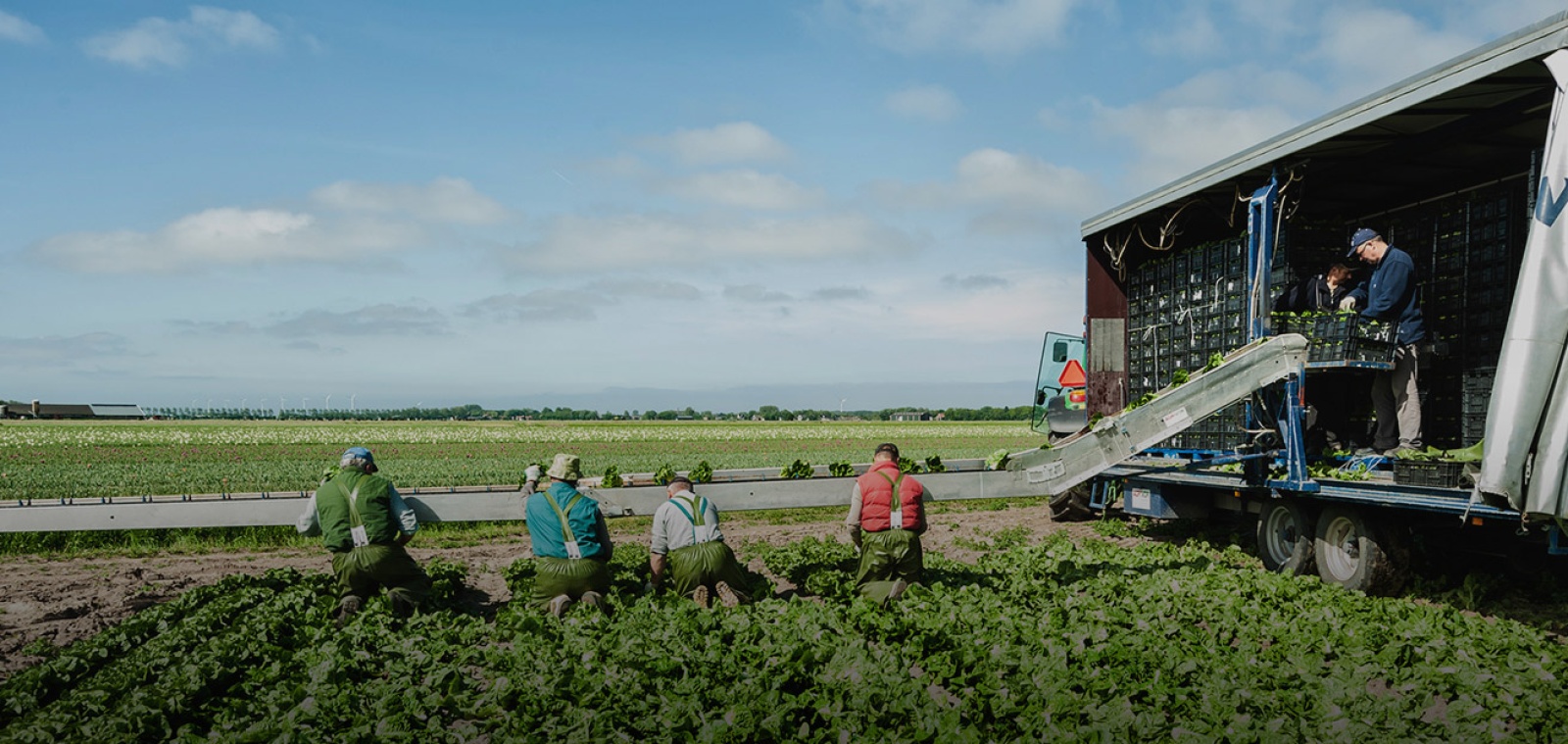
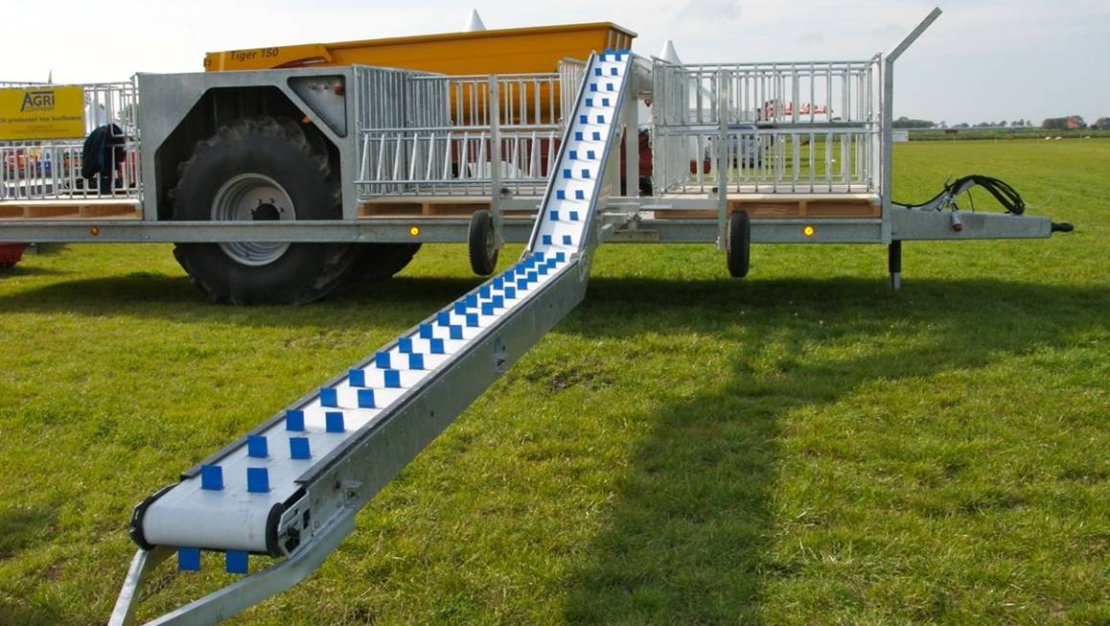
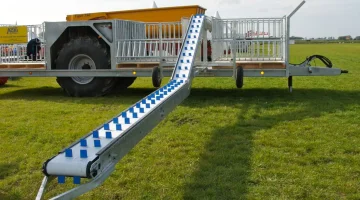
A harvest conveyor is used to harvest vegetables, large fruit and flowers straight from the field. The belt runs low to the ground, so workers don't have to reach far to place the product on it. From there, the harvest conveyor moves the crop to a trailer: the harvesting trolley, which is usually enclosed to protect the product from the sun and which runs on heavy tyres, so it stays stable even on muddy ground and doesn't sink in.
Duijndam Machines has a changing range of used harvest conveyors, including from the renowned Dutch brands Beets and Van den Beucken. Our machines are inspected before they go on sale and can be viewed at our premises. Besides used harvest conveyors, we also supply new, custom-built models.
How does a harvest conveyor work?
The harvest conveyor is placed alongside the harvesting trolley, making it possible to harvest a wide field in a single pass. This not only saves labour, but also results in a cleaner product with less damage than manually carrying it to the trolley.
Harvest conveyors are easy to mount on almost any farm trailer, with or without a canopy, and can therefore be used on multiple trailers. The belt is hydraulically driven and infinitely variable in speed. The frame is largely made of aluminium, which keeps the harvest conveyor lightweight — a heavy harvest conveyor would upset the balance of the harvesting trolley. Some versions come with extra options, such as an end stop, electro-hydraulic height and level adjustment, cross transport on the trailer, and wheels for transport on the road.
The working width and positioning of the belt are matched to the number of workers harvesting at the same time and to the row spacing of the crop. For wider crops, the harvest conveyor is sometimes used in combination with a second belt or an extension, so that several rows can be reached at once without workers having to walk any further than necessary.
The harvesting trolley: essential alongside the harvest conveyor
The harvest conveyor always works together with a harvesting trolley: the trailer that receives the harvested product. This trolley is usually enclosed — often with a canopy or a closed structure — so that the product stays protected against sun, wind and dehydration on its way to storage. Especially with vulnerable products such as cauliflower or summer flowers, that protection makes a noticeable difference to the quality on arrival at the barn.
A harvesting trolley also runs on heavy, wide tyres. This is necessary because during harvesting the trolley regularly has to drive fully loaded over loose, wet or muddy ground. Narrow or light tyres would sink in and cause rutting, damaging the field and making the trolley unstable. Heavy tyres keep the trolley stable, even with a full load and changing ground conditions.
At Duijndam Machines, alongside harvest conveyors, we also regularly have used harvesting trolleys available, suitable for varying pallet capacities.
For which crops is a harvest conveyor used?
Harvest conveyors are mainly used for crops that are harvested by hand. Think of cabbage, cauliflower, broccol and >span class="s1">lettuce, but also larger fruit such as pumpkins and melons, and summer flowers. In all these cases, the belt prevents workers from having to carry the product to the trolley by hand, which both saves labour and limits damage to the product.
With heavier products such as pumpkins and watermelons, the construction of the belt is put to an extra test: the weight is often not distributed evenly over the belt, but concentrated on a few points. This is exactly why the condition of the weld seams is so important to check when buying.
What to look out for when buying a used harvest conveyor?
You shouldn't choose a used harvest conveyor on price alone. The points below give a good picture of the machine's actual condition.
Is the belt still lying straight?
It sometimes happens that a harvest conveyor gets caught on something during use, or that damage occurs during storage. So check whether the frame is still straight.
Are there any cracks at the weld seams?
Harvest conveyors are almost always made of light aluminium, and that aluminium is often kept thin so the belt stays light. It's exactly at the points where the aluminium is welded together that cracks can develop, since the belt is regularly under heavy load, for example from several cabbages, pumpkins or watermelons at once. Check whether any weld seams have been professionally made and/or repaired.
Is the hydraulic system free of leaks?
Since the belt is hydraulically driven, it's important to check that there are no leaks at the hydraulic connections and cylinders.
Is there still room to loosen the conveyor belt at the end roller?
The often white conveyor belt of a harvest conveyor shrinks over time through use. As long as there is still room at the end roller to set the belt less tightly, this loss can be compensated for. If that room has run out, the conveyor belt needs replacing, and this is usually the most expensive part to replace.
How does the conveyor belt sound and run?
Listen to whether the belt runs smoothly or whether you can hear rattling, and check the inside of the belt for wear.
What is the brand?
Good-quality brands include Beets and Van den Beucken, both Dutch manufacturers with a good name on the second-hand market.
Duijndam Machines checks these points on every harvest conveyor we offer, so you know exactly what you're getting before you buy.
New, custom-built harvest conveyors
Besides used harvest conveyors, Duijndam Machines also supplies new harvest conveyors. Each new belt is individually designed based on CAD drawings and custom-built to your requirements. You determine the length and the desired options yourself. Discuss your requirements with one of our staff for a personal quote.
Why choose a second-hand harvest conveyor?
A new harvest conveyor is a significant investment, especially when custom-built. A good second-hand harvest conveyor is a cost-effective alternative that is often ready for immediate use. Duijndam Machines inspects every machine before it goes on sale and replaces worn parts where necessary.
Our machines can be viewed at our premises in Nieuwerkerk aan den IJssel (Rotterdam region). We deliver worldwide and have extensive experience with export.
Also take a look at our wider range of harvesting machines, harvesting trolleys and conveyor belts for the rest of your harvesting and processing chain.
Frequently asked questions about Harvesting Conveyor
Which crops are harvest belts used for?
A harvest belt is used for almost all hand-harvested vegetables and produce, such as cauliflower, endive, celery, cabbage, lettuce, broccoli, pumpkins, melons and cut flowers.
Why are harvest belts made of aluminium?
Aluminium keeps the weight of the harvest belt low. A lightweight construction is important because a heavy harvest belt would throw off the balance of the harvest wagon, especially on uneven terrain.
Can I have a harvest belt custom-made?
Yes. Duijndam Machines designs new harvest belts individually using CAD drawings, so the length and options fully match your wagon and your crop.
Can one harvest belt be used on multiple wagons?
Yes. Because a harvest belt is easy to mount on almost any agricultural wagon, with or without a cover, the same belt can be moved between wagons as needed.